The Problem Isn't Your Emotions

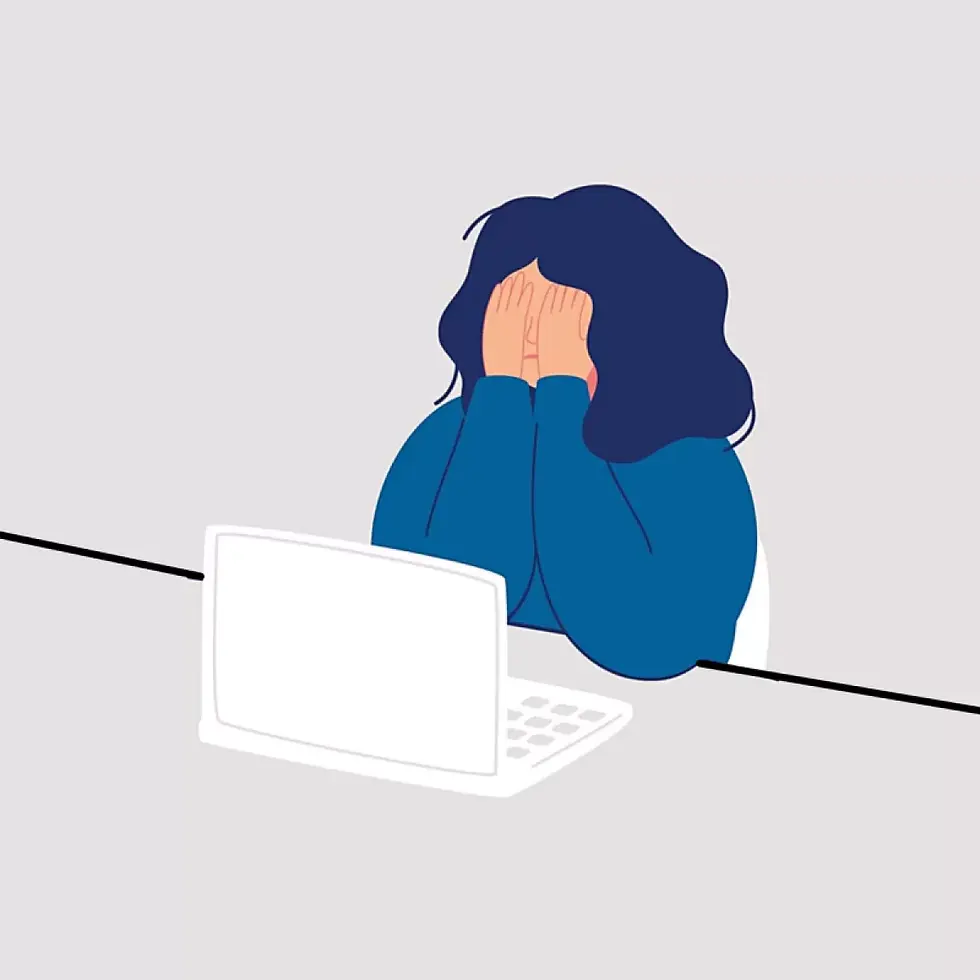
Lasting change doesn't come from avoiding emotional pain. It comes from learning to experience, process, and respond to our emotions.
By Kilondra Davis, LMHC, QS, NCC
The goal isn't to silence difficult emotions. It's to understand what they might be pointing us toward.
Many of us believe healing is when we eventually stop feeling anxious, sad, hurt, bitter, resentful, angry, or afraid. That those difficult emotions will simply disappear.
The truth is that healing isn't about never feeling pain again. It's about responding to pain differently. It means developing the capacity to understand where an emotion came from, recognize what it may be communicating, accept its presence without immediately trying to get rid of it, and choose how we respond.
A full life includes disappointment, grief, heartbreak, fear, uncertainty, joy, excitement, and love. Because life includes such a wide variety of experiences, we cannot have a goal of eliminating painful emotions. If that was our goal, we'd be asking for a version of life that doesn't exist. The very experiences that bring us the deepest joy, love, and connection also leave us vulnerable to disappointment, grief, and heartbreak. Instead, the goal is to develop a healthier relationship with our emotions.
Because the problem isn't that we have emotions.
The problem is the relationship we've developed with them.
And like any relationship, it can change.
What if I told you that there are no “good” or “bad” emotions? There are just emotions. Some are pleasant, some are unpleasant, and some may be neutral. We’ve developed the belief that the ‘bad’ emotions are something to avoid, fix, and get rid of. These beliefs may have come from our families, childhood experiences, society, culture, or the people we’ve looked to as role models. And maybe we weren’t explicitly told certain emotions were bad... but we’ve certainly heard the messages of…
Be strong.
Stop crying.
Get over it.
Just stay busy.
Distract yourself.
It’ll get better with time.
Its okay.
We were taught not to show them, not to need them, and not to listen to them.
We were taught what not to feel. We were never taught what to do when we did.
Instead, many of us learned to treat our emotions as problems to solve rather than experiences to understand.
We were never taught that our emotions could help us understand what we need.
Sometimes we've survived so much that we've become desensitized to our own emotional pain.
To rebuild the relationship with our emotions, we have to begin believing that our emotions are not indicators of weakness. Nor is the absence of an emotion a sign of strength.
Our emotions are one of the ways our minds and bodies communicate with us. They can alert us to danger, loss, unmet needs, violated boundaries, a belief that needs to be questioned, experiences that still need our attention, and the people and places that matter most to us.
Maybe you've smiled through conversations while your heart was breaking. Maybe you've stayed busy because slowing down meant feeling the grief. Maybe you've convinced yourself you're "fine" because you've spent years surviving. Maybe you’re telling yourself that other people have it worse. Maybe you’re telling yourself it was in the past and there is no point in “dwelling” on it now. Maybe you've become so disconnected from your emotions that you're no longer sure what you feel.
This is the challenge. Many of us spend more time trying to do away with our emotions by dismissing them or minimizing them, than trying to understand them.
What we often don't realize is that the energy we spend trying not to feel our emotions gives them more power.
Avoidance and suppression may feel like relief, but it's temporary. It offers us something we desperately want in the moment: distance from pain. We don’t have to think about the weight on our shoulders and heart. We keep ourselves busy, throw ourselves into work, scroll endlessly, sleep, avoid going home, or convince ourselves it doesn't matter. Over time, we may wear that mask for so long that we begin believing it's how we truly feel.
Every time we avoid an emotion, we strengthen our unhealthy relationship with it. We reinforce the belief that they are a problem, they are not welcome, and our job is to control and silence them.
The pain we’re trying to numb, and escape is often being prolonged by the very strategies we're using to avoid it.
The emotion isn't what keeps us stuck.
Our avoidance of it often does.
What we refuse to acknowledge rarely disappears. It simply finds another way to be heard.
It may appear as anxiety or difficulty sleeping. It may look like perfectionism, people-pleasing, or trying to control everything around us. Or it may quietly become emotional numbness, disconnection, withdrawing from relationships, or simply going through the motions.
Our emotions aren't trying to punish us. They're asking to be noticed, helping us process what happened, recognize what needs attention, and identify what may help us feel safer or more at peace. The next time a difficult emotion arises, what if we responded with curiosity instead of immediately trying to make it disappear, ask ourselves, "What happened that makes this emotion show up?"
Every emotion we experience is real, but not every emotion accurately reflects reality.
Sometimes we aren't avoiding our emotions, we're being consumed by them. This is where we have to remember that our emotions are part of the story, not the entire story. We need balance.
Our emotions are influenced by our thoughts, experiences, beliefs, memories, and interpretations. For example, feeling ashamed doesn't automatically mean you've done something shameful. Feeling anxious doesn't always mean you're unsafe. This is why curiosity is so powerful.
Instead of asking,
"How do I make this feeling go away?"
what if we asked,
"What is this feeling trying to tell me?"
At times, emotional pain can feel overwhelming, hitting us all at once. When this occurs, we can remember, our emotions are not asking us to stay in pain. They ask us to acknowledge them, understand them, and respond even if we have to slow down to do it, to address them one at a time, moment by moment.
This is not to take away from the heaviness of our experiences. It is to remind us that similarly to building physical strength, learning to sit with and carry the weight of our emotions takes practice.
With practice, we become more confident that we can experience discomfort without being consumed by it.
If you're not sure where to begin, start here:
Pause…
long enough to notice what you're feeling before trying to change it.
Name…
the emotion. There may be more than one to name.
Become curious….
about why it may be present.
Validate…
and give yourself permission to feel that what you’re going through is real
Identify…
what is within your control and what is not.
Take one step…
if there is a problem to solve
Choose…
a healthy coping strategy if there isn't, self soothe and move through the emotion.
Allow…
the emotion to pass
Repeat…
as often as you need
Its time that we let go of the “shoulds” and the “could haves”. Let go of the "what ifs”. Let go of the "always” and the “nevers”. Let go of the stories our minds have already decided are true. Let go of assuming the worst before it happens. Let go of the meanings we've attached to the painful experiences that no longer serve us. Let go of the expectations we held for circumstances that unfolded differently than we hoped.
We don't have to believe every thought our mind produces. We don't have to obey every emotion we experience. But every emotion deserves space and awareness.
A healthy relationship with our emotions involves making space for them without judgment, becoming curious about what they're communicating, and choosing how we want to respond rather than reacting automatically.
Perhaps the strongest people aren't the ones who never cry, never feel anxious, or never experience pain.
Perhaps they are the ones who have learned to sit with discomfort, listen to what it has to say, and respond with compassion.
Our emotions were never meant to take over our lives. Nor were they meant to be ignored. They were meant to be understood. Healing begins when we stop spending our energy trying to silence the very emotions that may be inviting us to notice what we need to address.
Give Yourself Permission For Reflection:
Take a moment to ask yourself:
What emotions have I been trying to avoid?
Do I judge myself for feeling this way?
What might change if I approached those emotions with curiosity instead of criticism?
What's one feeling I can make space for today instead of running from it?



Comments